The Nobel Prize: Alfred Nobel, the Family Empire, and the Prizes That Shocked the World
From dynamite and Baku oil to a peace activist who changed history — the full story of Alfred Nobel, how he made his fortune, why the Peace Prize is in Oslo, and the laureates who sparked outrage. Fact-checked and fully sourced.
SWEDENTOUR GUIDE
Zayera Khan
4/29/202611 min read
Every October, the world holds its breath as Stockholm and Oslo announce a handful of names that will define the year in science, literature, and peace. The Nobel Prize is the closest thing humanity has to a global seal of greatness. But behind the ceremony, the gold medals, and the champagne toasts at the Stockholm City Hall lies a far stranger, richer, and more complicated story than the official version ever tells.
The Family Behind the Name
Alfred Nobel did not arrive at greatness from nowhere. He came from an entire dynasty of inventors, engineers, and entrepreneurs who spent the 19th century reshaping the world's industrial landscape — and then losing it all, rebuilding it, and reshaping it again.
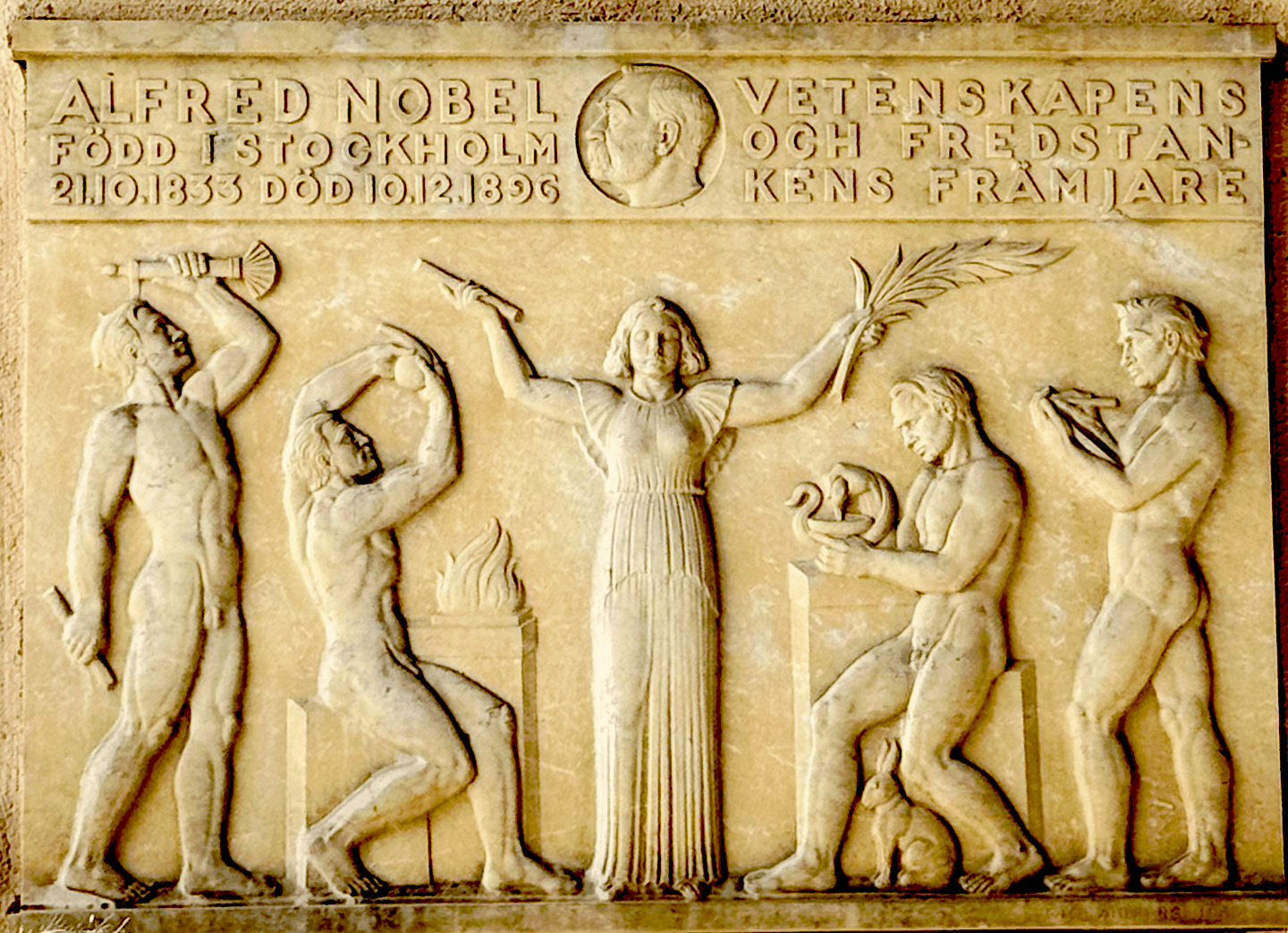
Alfred Bernhard Nobel was born on 21 October 1833 in Stockholm, Sweden. His father, Immanuel Nobel, was an inventor and engineer who built bridges and buildings and experimented with different ways of blasting rocks. When Alfred was still a young child, Immanuel's business in Sweden collapsed. He moved the family to St. Petersburg, Russia, where he reinvented himself — supplying the Russian military with machine tools and explosives, and inventing what would later become the naval mine. It was an arms deal that launched a dynasty.
The family factory produced armaments for the Crimean War, but had difficulty switching back to regular domestic production when the fighting ended, and they filed for bankruptcy. The Nobel family seemed constitutionally incapable of doing anything small — including failing.
Alfred's brother Ludvig would go on to become, arguably, the most successful of all the Nobel men. Together with his brother Robert, Ludvig operated Branobel, an oil company in Baku (now in Azerbaijan) which at one point produced 50% of the world's oil. He is credited with creating the Russian oil industry, and built the largest fortune of any of the Nobel brothers.
The story of how that happened is remarkable. In 1873, Ludvig entrusted his brother Robert with 25,000 rubles and instructed him to go to the Caucasus to procure walnut wood for gunstocks. Yet when Robert came to Baku, he could not resist the temptation to make a purchase that would prove life-changing for the Nobel family. Using the 25,000 rubles in his possession, Robert bought a small oil refinery. No walnut wood. An oil refinery. Ludvig, instead of being furious, sent more money. Within a few years, Ludvig also invented oil tankers, better refineries, and pipelines — technologies that transformed the global energy industry. The world's first oil tanker, the Zoroaster, was commissioned by the Nobels in 1878.
Alfred himself was the third brother, a financing partner in Branobel and the one who would ultimately eclipse them all — not through oil or arms, but through his will.
How Alfred Nobel Made His Fortune
Alfred Nobel held 355 patents during his life. He became fluent in six languages and filed his first patent at the age of 24. He was intellectually restless, moving across Europe and the United States, working under the Swedish-American naval inventor John Ericsson as a young man before returning to his father's St. Petersburg factory.
His obsession was nitroglycerin — a liquid explosive discovered by the Italian chemist Ascanio Sobrero, who strongly opposed its use because it was wildly unstable. Nobel saw something others didn't: enormous commercial potential, if only someone could make it safe.
In 1864, a deadly explosion killed his younger brother Emil. Deeply affected, Nobel developed a safer explosive: dynamite. He discovered that mixing liquid nitroglycerin with kieselguhr — a porous, clay-like siliceous earth — turned it into a stable paste that could be shaped into rods and inserted into mining and blasting holes. He named the result "dynamite," from the Greek word dynamis, meaning power. Nobel became wealthy by setting up companies and selling patent rights to dynamite and related products worldwide. By the 1870s, his production had grown from 11 tons per year to thousands. By the end of his life, he owned or had licensed factories across Europe and the United States.
He was, by any measure, one of the richest men of the 19th century.
"The Merchant of Death Is Dead"
In 1888, Alfred Nobel's brother Ludvig died while staying in Cannes, France. The French newspapers reported Ludvig's death but confused him with Alfred, and one paper sported the headline "Le marchand de la mort est mort" — "The merchant of death is dead." It stated that Nobel had "became rich by finding ways to kill more people faster than ever before."
Nobel read his own obituary. And he was appalled.
It is possibly concern over his posthumous reputation that led Nobel to leave the bulk of his fortune in trust to establish what came to be the most highly regarded of international awards, the Nobel Prizes. But the "merchant of death" story, while widely repeated, may be more myth than history — there is scholarly debate over whether the obituary as commonly described actually existed in the form quoted. What is certain is that Nobel was deeply ambivalent about his legacy, and that ambivalence drove him to act.
The Woman Who May Have Created the Peace Prize
Behind the Nobel Peace Prize is one of the most extraordinary friendships of the 19th century.
In 1876, Bertha Kinsky — later known as Bertha von Suttner — became Alfred Nobel's secretary and housekeeper in Paris. However, she resigned after one week to elope with her beloved Arthur von Suttner. Their brief working relationship sparked a decades-long correspondence that would change the course of history.
Even though Bertha von Suttner and Alfred Nobel only worked together for a short period of time, a strong friendship developed and lasted for the rest of their lives. The abundant correspondence between them laid the groundwork for Alfred Nobel's introduction to the growing peace movement in Europe.
Von Suttner became one of the most influential voices of the international peace movement. Her 1889 novel Lay Down Your Arms! — written from the perspective of a woman who loses loved ones to military violence — became an international bestseller, compared by Tolstoy to Uncle Tom's Cabin in its impact on public consciousness.
Nobel was not entirely a convert. He once wrote to her: "Perhaps my factories will put an end to war even sooner than your congresses. On the day when two army corps may mutually annihilate each other in a second, probably all civilized nations will recoil with horror and disband their troops." His thinking was not so different from the logic of nuclear deterrence — that weapons so terrible they would end war. Von Suttner disagreed, and kept writing to him. She kept sending him material. She kept making the case.
There is little doubt that Bertha von Suttner played a major role in inspiring Alfred Nobel to establish the peace prize. In 1893, two years before his final will, Nobel wrote to her outlining his first ideas about a peace prize. She was awarded the Nobel Peace Prize herself in 1905, nine years after his death. She is believed to have been a major influence on his decision to include a peace prize among those provided in his will.
She died on 21 June 1914. One week later, Archduke Franz Ferdinand was assassinated in Sarajevo. World War One had begun.
Why Did Nobel Create the Prizes?
Alfred Nobel had a lifelong devotion to science and suffered and died from severe coronary and cerebral atherosclerosis. He was a bibliophile, an author, and mingled with the literati of Paris. His interest in harmony among nations may have derived from the effects of the applications of his inventions in warfare, and his friendship with a leader in the peace movement.
In his last will and testament, he wrote that much of his fortune was to be used to give prizes to those who have done their best for humanity in the field of physics, chemistry, physiology or medicine, literature, and peace. Not everybody was pleased with this. His will was opposed by his relatives and questioned by authorities in various countries. It took four years for his executors to convince all parties to follow Alfred's wishes.
The Nobel Foundation was formally established on 29 June 1900. The first prizes were awarded on December 10, 1901 — the fifth anniversary of Nobel's death, a date that anchors the ceremony to this day.
Why Oslo? The Peace Prize and the Norwegian Question
Of all the oddities in Nobel's will, the most frequently asked question is this: why is the Peace Prize awarded in Norway and not Sweden?
Nobel left no explanation as to why the prize for peace was to be awarded by a Norwegian committee. The most likely explanations include: Nobel may have been influenced by the fact that Norway was in union with Sweden at the time, and since the scientific prizes were to be awarded by Swedish committees, he may have felt the peace prize ought to go to a Norwegian one. He may have considered Norway a more peace-oriented and more democratic country than Sweden. And he may have been influenced by the strong interest of the Norwegian parliament in the peaceful resolution of international disputes in the 1890s.
There is also a theory — supported by his correspondence with von Suttner — that Nobel admired Norwegian fiction, particularly the peace activist author Bjørnstjerne Bjørnson. Norway had no comparable militaristic tradition to Sweden's, and this may have mattered to a man who spent his life building weapons.
The Norwegian Nobel Committee speculates that Nobel may have considered Norway better suited to awarding the prize, as it did not have the same militaristic traditions as Sweden. It also notes that at the end of the 19th century, the Norwegian parliament had become closely involved in the Inter-Parliamentary Union's efforts to resolve conflicts through mediation and arbitration.
Nobody knows for certain. Nobel is silent on the matter.
How the Peace Prize Committee Is Chosen
The Norwegian Nobel Committee is composed of five members appointed by the Storting — the Norwegian parliament. The committee's composition reflects the power balance in the legislature. To avoid the perception that the prizes are influenced by Norway's political leaders, sitting members of the Norwegian government or Parliament are barred from serving on the committee.
The committee operates independently — or insists that it does. Critics argue that five members appointed by a national parliament can never be truly apolitical, and that argument has only intensified over the decades. The Peace Prize's long history of controversy is inseparable from this structural tension.
The Prizes: What They Are, How They Work
Alfred Nobel's will established five original categories: Physics, Chemistry, Physiology or Medicine, Literature, and Peace. Physics and Chemistry are evaluated by the Royal Swedish Academy of Sciences. Medicine by the Nobel Assembly at the Karolinska Institute. Literature by the Swedish Academy. Peace by the Norwegian Nobel Committee.
A sixth prize — the Sveriges Riksbank Prize in Economic Sciences in Memory of Alfred Nobel — was added in 1968 when Sweden's central bank celebrated its 300th anniversary and donated funds to the Nobel Foundation to establish a new award in economic sciences. It was first awarded in 1969. It follows the same process and is announced alongside the original prizes, though it was not part of Nobel's will and has attracted debate ever since. Nobel family members have publicly called it a "false Nobel Prize."
The nominees are not publicly named, nor are they told they are being considered. All nomination records for a prize are sealed for 50 years from the awarding of the prize. For the scientific prizes, nominations are by invitation only. For the Peace Prize, any person meeting qualifying criteria can submit a nomination.
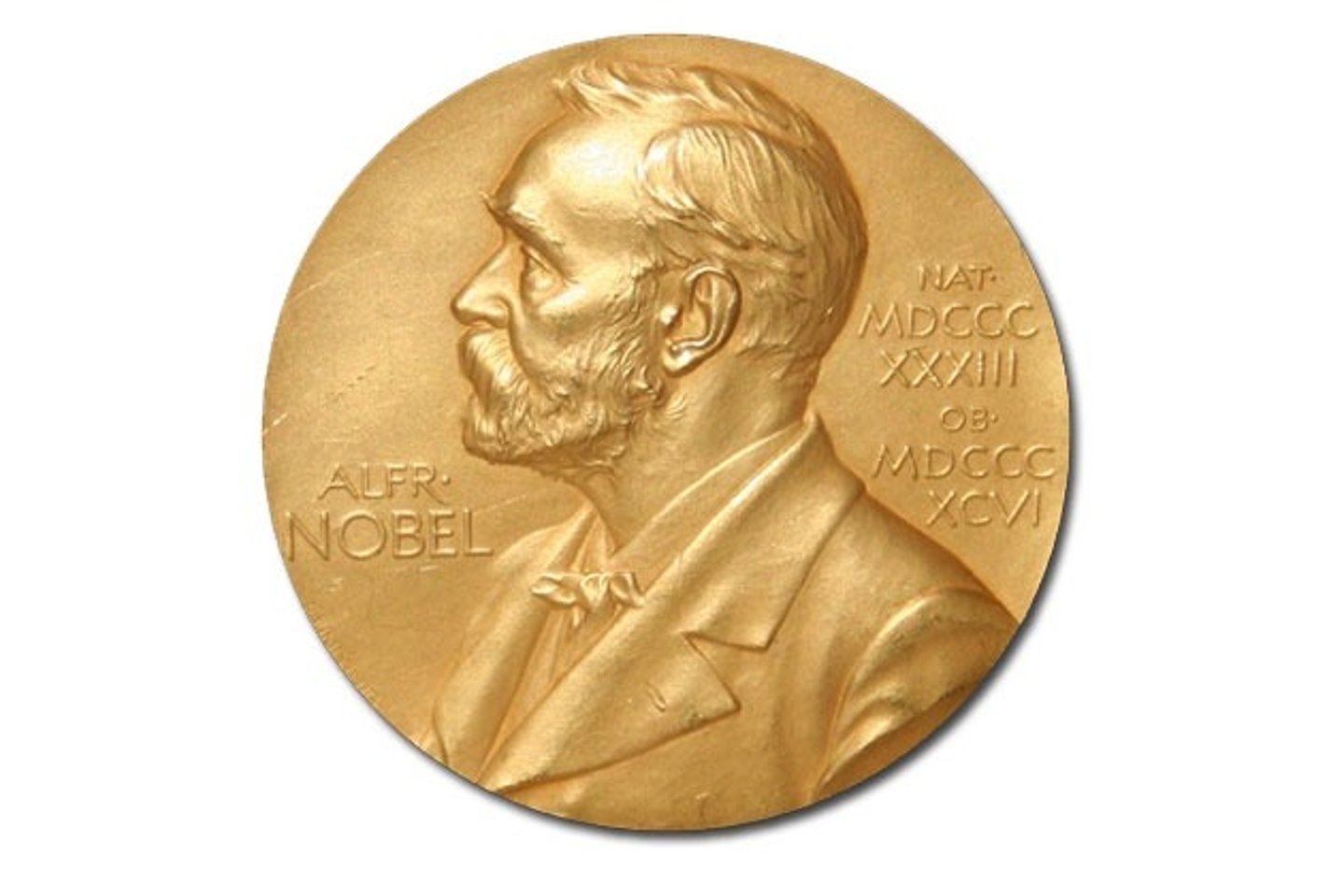
Each laureate receives: a diploma — a unique work of art, created by foremost Swedish and Norwegian artists and calligraphers; a medal — struck in 18-carat green gold plated with 24-carat gold (since 1980; earlier medals were solid 23-carat gold); and a cash prize — in 2025, the amount is 11 million Swedish kronor, approximately $1.2 million USD per award.
The prizes are presented every year on December 10th, the anniversary of Nobel's death. The Peace Prize ceremony takes place in Oslo City Hall. All other ceremonies and the Nobel Banquet are held in Stockholm.
Notable Milestones
Marie Curie was the first woman to win a Nobel Prize, the first person to win a Nobel Prize twice, and the only person to win in two different scientific fields — Physics in 1903 and Chemistry in 1911. Her own path to the first prize was nearly derailed by the Nobel Committee's initial decision to nominate only her husband Pierre and their colleague Henri Becquerel. Pierre protested, insisting Marie's contribution be recognised. It was only then that her name was added.
The International Committee of the Red Cross has been honoured with the Nobel Peace Prize three times. Its founder, Henry Dunant, was also awarded the very first Nobel Peace Prize in 1901.
Since 1974, the rules state that a prize cannot be awarded posthumously — though if a laureate dies after the announcement and before the ceremony, the prize is still presented.
The Most Controversial Prize Winners
The Nobel Prize is chosen by committees, shaped by politics, and awarded by humans. It has never been above controversy.
Henry Kissinger — Nobel Peace Prize, 1973 The award was highly criticised, not least because Kissinger had ordered a bombing raid on Hanoi while the ceasefire negotiations were still underway. Two members of the Nobel Committee resigned in protest. His co-recipient, Lê Đức Thọ, refused the prize entirely. It remains one of the most scorned decisions in the prize's history.
António Egas Moniz — Nobel Prize in Physiology or Medicine, 1949 The Portuguese neurologist received the prize for devising the lobotomy — a procedure where part of the brain is cut away — bestowed despite protests from the medical establishment. The procedure was later widely condemned as barbaric and responsible for permanently disabling thousands. The Nobel Committee does not revoke prizes. This one stands.
Yasser Arafat, Yitzhak Rabin, and Shimon Peres — Nobel Peace Prize, 1994 The three shared the award for their work on the Oslo Peace Accords. A member of the Nobel Committee, Kåre Kristiansen, resigned over Arafat's inclusion. The Oslo Accords did not produce lasting peace, and the prize became a symbol of the committee's tendency to reward aspiration over outcome.
Barack Obama — Nobel Peace Prize, 2009 Obama received the prize just nine months into his first term as US president. Many criticised the nomination as premature, arguing he had not been in power long enough to deserve it. Obama himself said he did not deserve the prize. The former director of the Nobel Institute later appeared to agree, writing in his autobiography that the committee's intention had been to strengthen Obama's political position — a goal that was not achieved.
Watson, Crick, and Wilkins — Nobel Prize in Physics, 1962 This case is controversial for who was left out. The prize for the discovery of the double-helix structure of DNA went to Watson, Crick, and Wilkins, to the exclusion of Dr. Rosalind Franklin, whose work in X-ray diffraction produced images of DNA vital to the discovery. The winners failed to cite Franklin's work in their initial publications. Franklin had died in 1958 and could not be nominated posthumously under the rules that would be formalised in 1974. Her erasure from the story remains one of the most documented examples of gender bias in the history of science.
Fritz Haber — Nobel Prize in Chemistry, 1918 Haber was awarded the prize for discovering the Haber-Bosch process for producing ammonia — crucial to creating fertilizer and reducing global hunger. But Haber was also instrumental in developing the chlorine gas used in chemical warfare during World War I. The Nobel Committee considered his wartime activities but concluded his ammonia synthesis process represented "the greatest benefit to mankind." Many have never accepted that reasoning.
Carl von Ossietzky — Nobel Peace Prize, 1935 This one was controversial not because the winner was undeserving, but because of how much courage it took. The Nobel Foundation awarded the 1935 prize to Ossietzky, a German writer who had publicly opposed Hitler and Nazism. Hitler reacted by issuing a decree on 31 January 1937 forbidding German nationals from accepting any Nobel Prize. Ossietzky was in a concentration camp at the time of the announcement. He died in 1938, never having been freed. Today it is regarded as one of the bravest decisions the committee has ever made.
Who Said No: The People Who Declined
Only two people have voluntarily declined a Nobel Prize. Others had no choice.
Jean-Paul Sartre — Nobel Prize in Literature, 1964 (voluntary) Sartre declined, stating: "A writer must refuse to allow himself to be transformed into an institution, even if it takes place in the most honourable form." He had declined all official honours throughout his life. The committee awarded it regardless; he simply never collected it.
Lê Đức Thọ — Nobel Peace Prize, 1973 (voluntary) Thọ declined, saying there was no actual peace in Vietnam. The war resumed four months after he was declared a winner. He is the only person ever to voluntarily refuse the Nobel Peace Prize.
Boris Pasternak — Nobel Prize in Literature, 1958 (forced) Pasternak was awarded the prize largely for Doctor Zhivago, which was banned in the Soviet Union. He initially accepted the honour, but Soviet authorities forced him to decline it. He died in 1960, two years later, without ever having been able to accept in person.
Richard Kuhn, Adolf Butenandt, and Gerhard Domagk — 1938 and 1939 (forced) After Adolf Hitler barred all Germans from accepting a Nobel Prize, Kuhn (1938, Chemistry), Butenandt (1939, Chemistry), and Domagk (1939, Physiology or Medicine) were forced to refuse their awards. The men later received their diplomas and medals, though not the prize money, which had already been reallocated.
The Nobel Prize is the closest thing we have to a global consensus on human achievement. It was created by a man who felt the weight of his own legacy — who watched the world use his inventions to wage war, who read his own obituary and decided he wanted a different ending to his story. Whether it always achieves that goal is another question entirely.
But it keeps us arguing. And that, perhaps, is the point.
Sources: Nobel Foundation (NobelPrize.org), Nobel Peace Prize Centre, Britannica, Wikipedia, Library of Congress, NIH/PubMed, Science History Institute
Written by Claude AI. Prompt by Zayera Khan, April 2026.