
Stockholm’s Dirty Little Taxi Secret (And How Not to Fall For It)
Stockholm is one of Europe’s most visitor-friendly capitals — until you hail the wrong taxi. Here’s what’s really happening with unregulated fares, the numbers behind it, and exactly how to protect yourself before you get in the car.
Stockholm gets a lot of things right. The transit system is genuinely excellent. The city is walkable, legible, and — by most European capital standards — remarkably honest. So it’s particularly frustrating that one of the most common complaints from visitors involves something as basic as getting from A to B.
Let me set the scene.
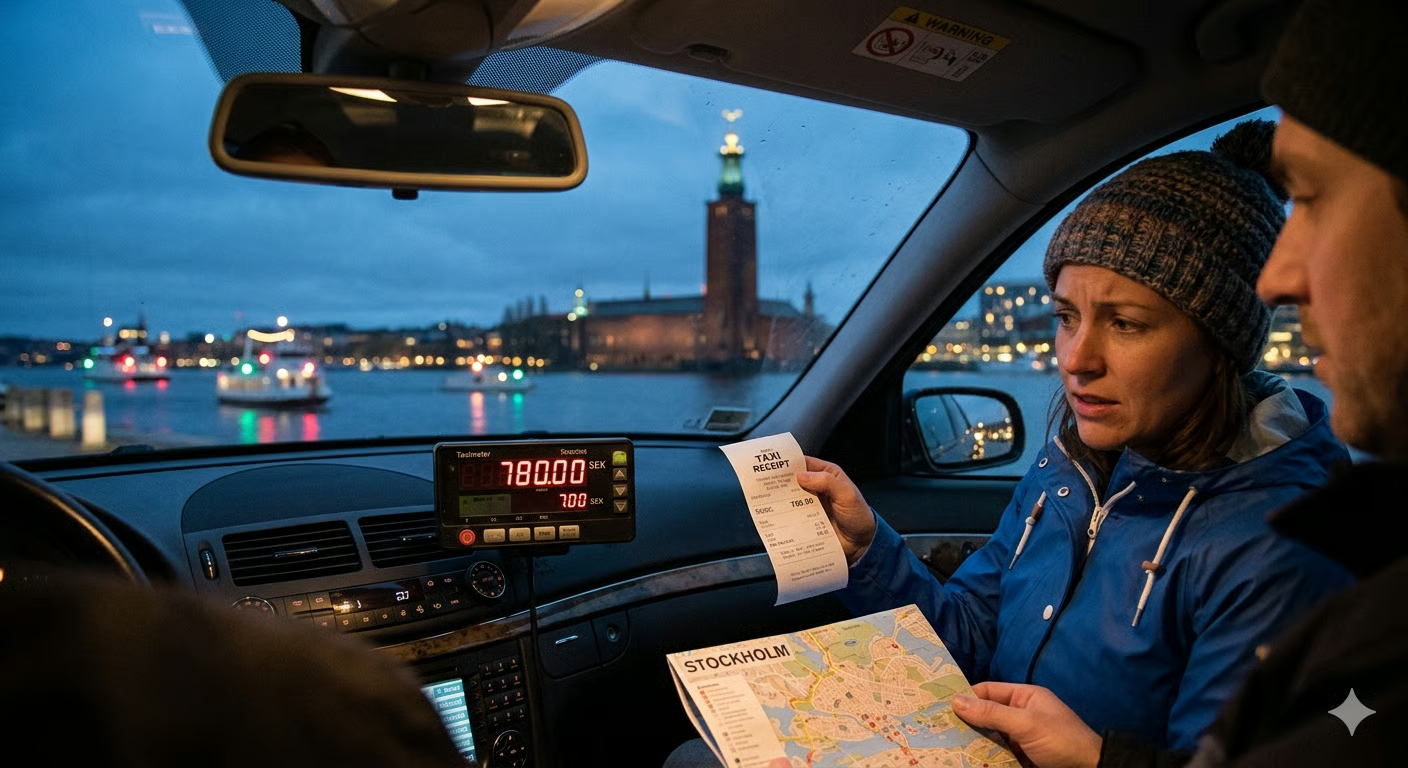
Sunday, 29 March 2026. I put a family of tourists into a taxi outside the Vasa Museum. Nothing unusual there. But when I later heard what they’d paid — nearly 800 SEK for a 3.7-kilometre ride to City Hall — I felt that particular Stockholm shame that locals know well. The kind where you want to apologise on behalf of your city.
That trip should have cost around 250–300 SEK. They paid nearly three times that. And here’s the infuriating part: it was completely legal.
The numbers are not pretty
This isn’t an isolated incident. Sweden’s taxi market has been almost entirely deregulated since 1990, making it one of the most loosely regulated in Europe. What followed was predictable.
According to the Swedish Transport Agency (Transportstyrelsen), complaints about taxi overcharging have consistently ranked among the top consumer grievances in Stockholm. Konsumentverket, the Swedish Consumer Agency, has repeatedly flagged the capital’s tourist zones — Gamla Stan, Djurgården, Arlanda — as hotspots for exploitative pricing.
What overcharging actually costs
Sources: Transportstyrelsen, Konsumentverket, ETOUR (2022 visitor survey), Stockholm Chamber of Commerce (2023 report).
The Arlanda route is perhaps the most notorious. Legitimate taxis charge around 500–600 SEK from Arlanda to central Stockholm. Friåkare — independent, free-agent taxis with no company affiliation — regularly charge 1,500–2,500 SEK for the same trip, prices that have appeared in Swedish consumer media as recently as 2024. Some visitors have reported paying upwards of 3,000 SEK.
How it works (and why it’s legal)
Sweden deregulated its taxi market with good intentions — to increase competition and lower prices. In practice, it created a two-tier system. Reputable companies like Taxi Stockholm and Taxi Kurir operate transparently, with metered fares and trained drivers. Then there’s a grey layer of independent operators who set their own rates, park strategically outside tourist attractions, and rely entirely on passengers not knowing what a fair price looks like.
The law only requires that the price be displayed — on the so-called jämförpris, a yellow comparative-price sticker on the rear window, showing the estimated cost of a standard 10 km / 15-minute journey.
| Operator | Jämförpris shown | Status |
|---|---|---|
| Reputable company | 350–450 SEK | Fair, metered fare |
| Friåkare | 900–1,500 SEK | Technically disclosed. Practically predatory. |
What makes this especially effective as a trap is timing. By the time most passengers notice anything wrong, their luggage is in the boot and they’re already moving.
How to protect yourself
- Check the yellow sticker before you get in. It’s on the rear side window. If the jämförpris shows more than 500 SEK, close the door and walk away.
- Stick to named companies. Taxi Stockholm (blue/yellow), Taxi Kurir, and Sverigetaxi are the reliable ones. Avoid unmarked or loosely branded vehicles, especially those parked directly outside major tourist sites.
- Book via app. Uber and Bolt both operate in Stockholm and show you the price before you confirm. Taxi Stockholm and Taxi Kurir also have their own apps with fixed pricing on common routes.
- Ask for a fixed price upfront. Before you open the door: “How much to [destination]?” Reputable drivers are used to this question. If someone dodges it or seems irritated, that’s your answer.
- Know a few benchmarks — see the table below.
| Route | Fair price |
|---|---|
| Vasa Museum → City Hall | ~250–300 SEK |
| Gamla Stan → Södermalm | ~150–200 SEK |
| Central Station → Arlanda | ~500–600 SEK (fixed rate, reputable companies) |
Arriving by cruise ship instead? The fare bands for Frihamnen and Stadsgården are in my Stockholm cruise ports guide.
A note on Stockholm’s reputation
I say this as someone who genuinely loves this city and works within its tourism ecosystem: Stockholm cannot afford to keep losing visitors’ trust over something this avoidable. The taxi problem is well-known, often discussed, and stubbornly persistent. Until regulation catches up — and there are ongoing political discussions about reintroducing fare caps — the responsibility falls on us to warn people before they arrive, not after.
So share this. Send it to a friend planning a trip. Leave it in a travel forum. The Vasa Museum is magnificent. The City Hall is worth every step. The taxi between them should not cost the same as dinner.
Have you been caught out by taxi pricing in Stockholm — or somewhere else? I’d love to hear your experience in the comments.
The short version: Check the yellow jämförpris sticker before you get in — over 500 SEK, walk away. Use Taxi Stockholm, Taxi Kurir, Sverigetaxi, Uber, or Bolt. Ask the price before you open the door. A fair fare from Arlanda is 500–600 SEK; from the Vasa Museum to City Hall, 250–300 SEK; Gamla Stan to Södermalm, 150–200 SEK.