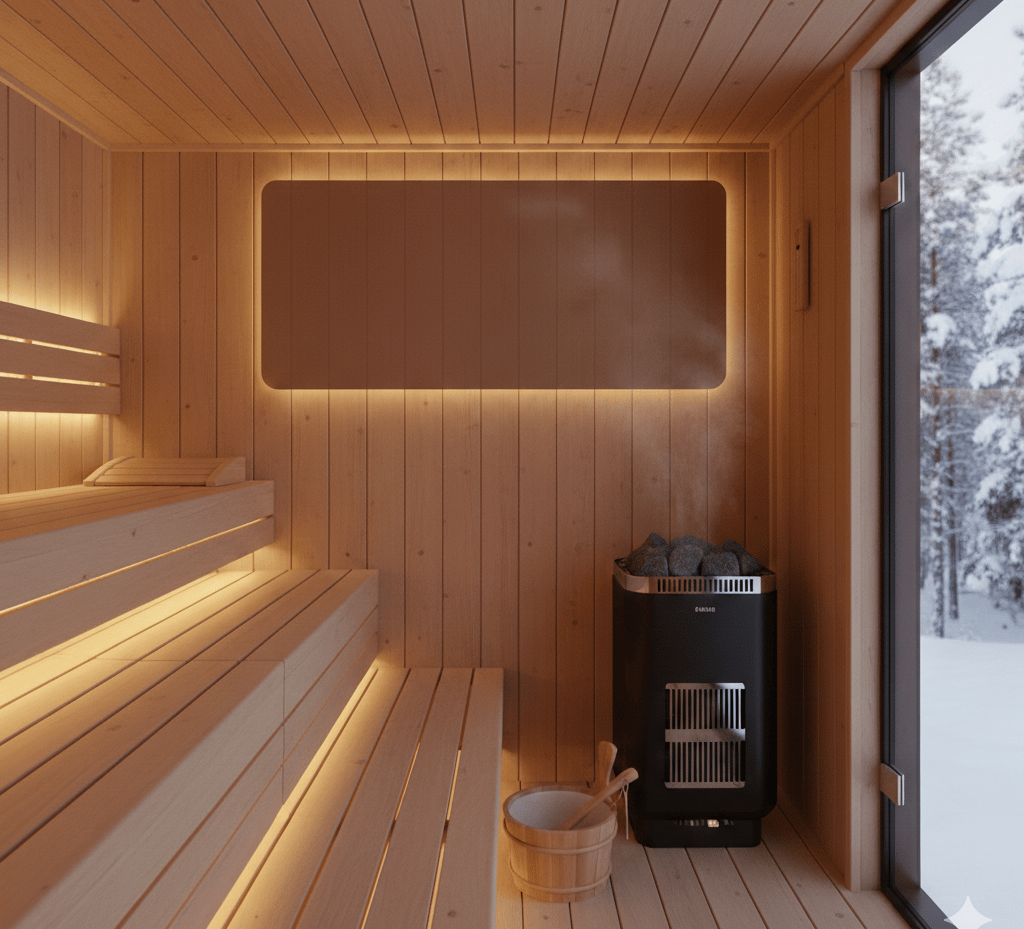
Dry Sauna for Longevity: Science, Results
Discover how dry sauna supports heart, brain, and recovery.
LIFESTYLESWEDEN
Zayera Khan
1/25/20263 min read
For more than 40 years I’ve used dry sauna as part of my healthcare routine—most regularly over the last 15 years, especially in winter. I typically go 1–2 times per week to my sauna club.
In Sweden we have saunas in swimming halls, so I always do sauna after swimming and exercise at the gym.
It’s social, simple, and—importantly—supported by growing research on heart, brain, metabolic, and mental health.
Why Dry Sauna?
Supports cardiovascular health (vasodilation, improved blood flow)
May aid metabolic fitness and recovery
Promotes relaxation, sleep quality, and stress reduction
Triggers heat-shock proteins and other adaptive responses
My cadence: traditional Finnish-style dry sauna, 10-15 minutes per session, cool-down, rehydrate with water + electrolytes. The shortest period I do sauna in 30 minutes, and the longest up to 1,5 hours.
A conservative, evidence-aligned way to start
If you’re new to sauna—or returning after a long break—an approachable, research-aligned template is:
Temperature: 80–90 °C (176–194 °F) to start.
Duration: 10–15 minutes, building toward ~19 minutes as tolerated.
Frequency: 2–3×/week initially; up to 4–7×/week if you enjoy it and tolerate it well.
Hydration: Rehydrate with water + electrolytes post-session; avoid alcohol before/after.
Safety: Stand up slowly; cool down gradually. Skip sessions when ill, after alcohol, or if you have unstable cardiovascular/respiratory conditions. Talk to your clinician if you’re pregnant or have heart issues.
What the strongest research says (Finnish dry sauna)
Large, long-term cohort studies in Finland (traditional dry sauna, ~80–100 °C / 176–212 °F, low humidity) have repeatedly linked frequent sauna use with better health outcomes:
Lower all-cause & cardiovascular mortality: Men using sauna 4–7×/week had substantially lower risks of sudden cardiac death, coronary heart disease, cardiovascular disease, and all-cause mortality compared with 1×/week. Association strengthened with longer sessions (~19 min).
Lower risk of hypertension: Regular sauna use was linked with a lower incidence of high blood pressure over 22 years of follow-up.
Neurocognitive benefits: Higher sauna frequency (2–3× and 4–7×/week) was associated with lower risks of dementia and Alzheimer’s disease.
Inflammation & longevity: In middle-aged/older Finnish men, frequent sauna use appeared to offset the elevated mortality risk associated with high high-sensitivity C-reactive protein (hsCRP). (This suggests a potential anti-inflammatory pathway, though causality isn’t proven.)
Bottom line: The best-quality evidence points to meaningful associations (not proof of causation) between frequent Finnish-style sauna and better heart, brain, and survival outcomes.
Mechanisms: why heat might help
Heat stress from dry sauna can trigger beneficial adaptations: vasodilation and increased blood flow, mild cardiovascular conditioning, activation of heat-shock proteins, and potential anti-inflammatory effects—similar in some ways to light-to-moderate exercise.
Detox claims: what’s known vs. unknown
There’s peer-reviewed evidence that sweating can excrete some heavy metals (e.g., arsenic, cadmium, lead, mercury), but high-quality trials establishing clinical benefit are limited. Treat “detox” claims cautiously and prioritize reducing exposures in the first place.
Male fertility: a real caution
Heat is not a friend to sperm. Reviews and small interventional studies report that high temperature exposure (including sauna) can temporarily impair semen parameters (motility, morphology, DNA integrity). Effects can be reversible after stopping heat exposure, but men actively trying to conceive—or wishing to protect fertility—should be careful with frequency, duration, and scrotal temperature.
About Bryan Johnson’s fertility/microplastics findings: Johnson reported large reductions in measured environmental toxins and an ~85% drop in microplastics in semen and blood during a high-temperature daily sauna protocol while using ice packs to keep the testicles cool. Fascinating, but these are self-reported, non-peer-reviewed data and should be treated as preliminary until replicated independently.
Credit: I also want to credit Bryan Johnson and his Blueprint team for bringing renewed attention (and data!) to sauna. Johnson’s self-experiments helped spark this post; below I separate the peer-reviewed evidence from his personal findings so you can see what’s well-established vs. exploratory.
Tags/Hashtags: sauna, dry sauna, Finnish sauna, heat therapy, longevity, heart health, brain health, recovery, Blueprint, Bryan Johnson
#sauna #drysauna #FinnishSauna #longevity #recovery #hearthealth #brainhealth #Blueprint #BryanJohnson #ZayeraWellness