Pristina — Notes from Europe's Newest Capital
A factual guide to Pristina and Kosovo — covering the city, population, demographics, politics, religion, geopolitics, economy, and practical travel information including how to get there from Skopje, what to see, and when to visit.
KOSOVOSITES TO VISIT
Zayera Khan
4/9/20268 min read
A visit to Kosovo: the city, the country, and everything in between
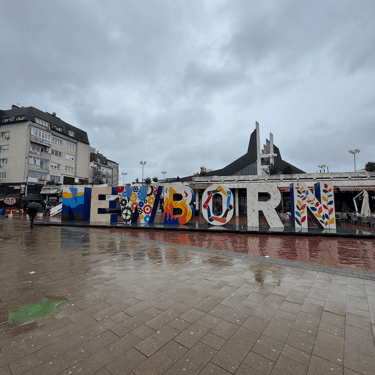
The NEWBORN monument stands in the middle of a pedestrian square in central Pristina, its oversized letters repainted every year since they first appeared on 17 February 2008 — the day Kosovo declared independence.
The City
Pristina — or Prishtinë in Albanian, Priština in Serbian — is the capital and largest city of Kosovo. According to the 2024 census, it has a population of approximately 227,000 in the city proper, and around 507,000 in the broader district. It sits in central Kosovo at a modest elevation, flanked by the Šar Mountains to the south and the Kosovo plain stretching northward.
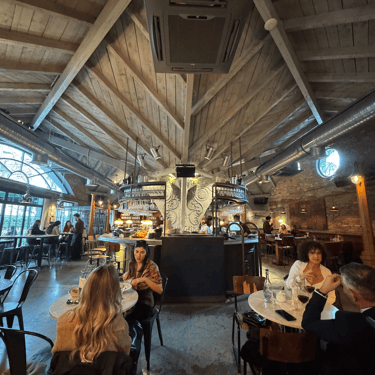
The city centre is compact and walkable. Ottoman-era mosques sit alongside socialist-era concrete blocks, next to newer glass-and-steel construction. Unfinished buildings are common. So are coffee shops, and there are a lot of them.
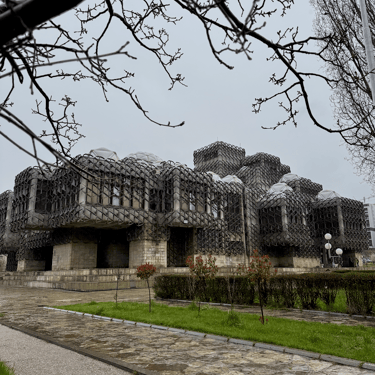
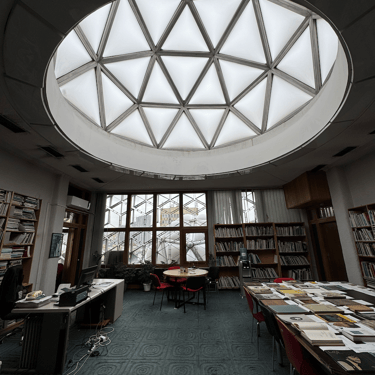
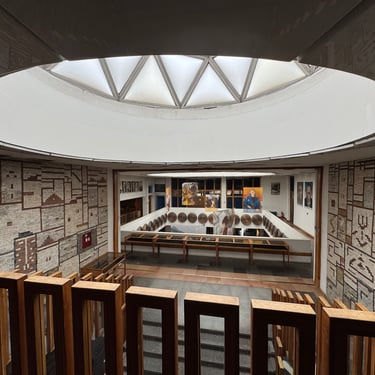
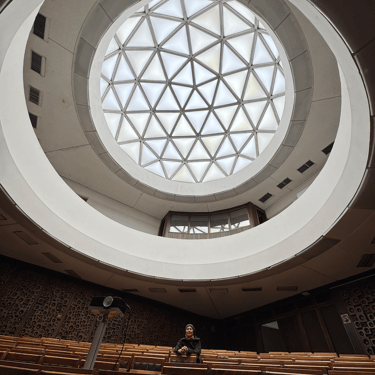
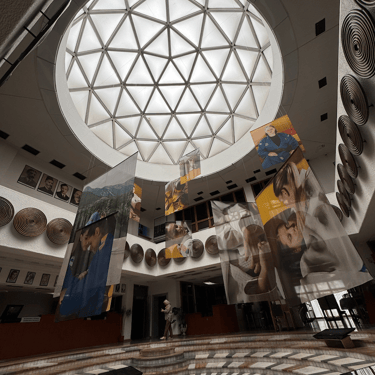
The National Library — formally the National and University Library "Pjetër Bogdani" — is one of Pristina's most distinctive buildings. Completed in 1982 during the Yugoslav period, it is covered in 99 white domes and wrapped in a metal grid structure. Architectural opinions on it vary sharply. From the outside, through bare spring branches, it reads as something between a space station and a beehive. Inside, the auditorium beneath its geodesic dome is strikingly still.
Kosovo: The Basics
Kosovo has a total area of 10,887 square kilometres — roughly the size of Jamaica. Its 2024 census recorded a population of 1,585,566, a decrease of approximately 7.9% from the 2011 census, reflecting significant ongoing emigration.
Kosovo declared independence from Serbia on 17 February 2008. As of 2025, it is recognised by approximately 110 of 193 UN member states, including all G7 nations and 22 of 27 EU member states. It is not a member of the United Nations. Russia and China have indicated they would veto any UN membership application at the Security Council level.
In July 2010, the International Court of Justice issued an advisory opinion stating that Kosovo's declaration of independence did not violate international law. The question of sovereignty remains unresolved at the international level.
The official languages are Albanian and Serbian. Albanian is spoken by over 92% of the population.
Demographics
The 2024 census recorded the following ethnic composition: Albanian 91.8%, Serb 2.3%, Bosniak 1.7%, Turk 1.2%, Ashkali 1.0%, and others.
Kosovo has a relatively young population — the median age is 34.8 years.
Ethnic Serbs are concentrated primarily in North Kosovo and select municipalities including Gračanica and Štrpce. Turks form a local majority in Mamusha. Bosniaks are mainly found in Prizren, and the Gorani community in the southernmost municipality of Dragash.
Roughly one-third of people born in Kosovo now live abroad — one of the highest emigration rates in the world. The population decrease since 2011 amounts to over 154,000 people. Migration has accelerated in recent years, particularly to Germany following regulatory changes to that country's labour market access in 2024.
Politics
Kosovo is a parliamentary representative democratic republic. The 120-seat Assembly is elected every four years through proportional representation; 20 seats are reserved for minority communities, including 10 for Kosovo Serbs.
As of early 2026, the Prime Minister is Albin Kurti, sworn in for a third term in February 2026 following snap elections in December 2025. The President is Vjosa Osmani, whose term ends in April 2026.
Kosovo submitted a formal application for EU membership in December 2022. It remains a potential candidate — not yet in formal accession negotiations. A significant milestone came on 1 January 2024, when Kosovo passport holders gained visa-free access to the Schengen Area for stays of up to 90 days within any 180-day period.
Relations with Serbia remain the defining political issue. Serbia does not recognise Kosovo's independence. EU-facilitated dialogue between Belgrade and Pristina continues but has not produced a resolution on the core sovereignty question. North Kosovo — majority Serb, geographically adjacent to Serbia — has been the site of recurring tensions, including barricades and security incidents in 2022–2023.
Religion
According to the 2011 census (the most recent with religious data), the population is approximately 95.6% Muslim, 2.2% Roman Catholic, and 1.4% Serbian Orthodox.
Islam arrived with the Ottoman Empire in the mid-15th century and remained the dominant religion through four centuries of Ottoman rule. The majority of Kosovo's Muslims follow the Hanafi Sunni tradition; Sufi communities also exist.
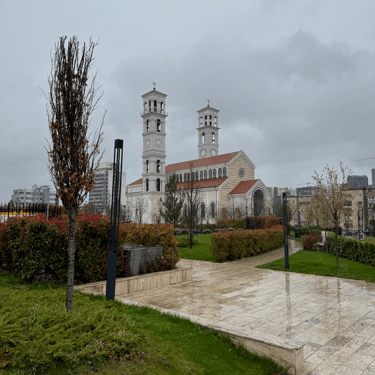
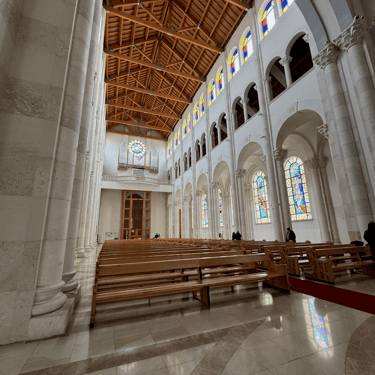
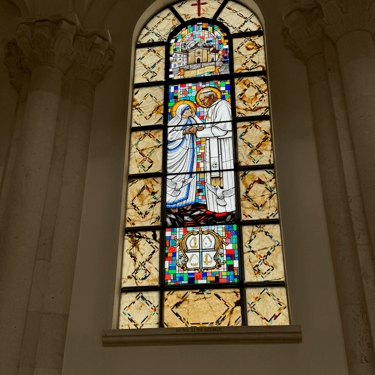
Kosovo's Catholic community is small but visible in Pristina. The Cathedral of Saint Mother Teresa, consecrated in 2010, is the largest Roman Catholic church in Kosovo. It is named after Mother Teresa (1910–1997), who was born in Skopje to a Kosovar Albanian family. The cathedral sits in a central park opposite the main boulevard, with twin bell towers and a Romanesque facade. Inside, the nave is bright and largely unadorned; the stained glass windows depict Mother Teresa's life and canonisation.
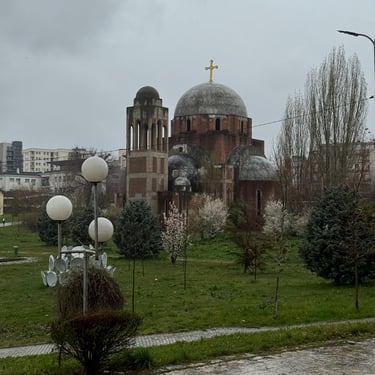
The Serbian Orthodox community worships primarily in ten Serb-majority municipalities. On the grounds of the University of Pristina, there is a large Orthodox church that has remained unfinished and unused since the 1999 war. It is visible from the street — a substantial structure with domes, standing incomplete.
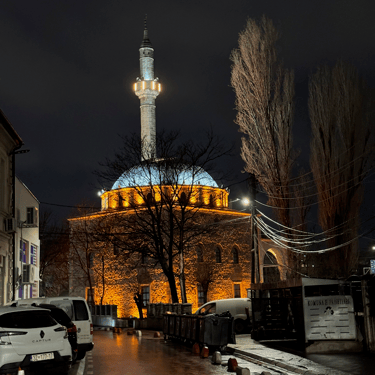
The oldest mosque in central Pristina — the Çarshia Mosque, dating to the 15th century — is still in use. At night, lit against the dark, it is one of the more striking sights in the old part of the city.
Kosovo is frequently cited in international reports as having relatively high levels of inter-religious tolerance compared to the wider regional context, though this characterisation is difficult to quantify precisely.
Geopolitics & Economy
Geopolitics
NATO's Kosovo Force (KFOR) has maintained a presence in Kosovo since the end of the 1999 war, operating under UN Security Council Resolution 1244. In 2023, KFOR deployed up to 1,000 additional troops following security escalations in northern Kosovo. The EU's rule-of-law mission EULEX operates alongside KFOR, supporting Kosovo's police, judiciary, and customs institutions.
The United States has a significant military presence through Camp Bondsteel, one of the larger US military installations in Europe. The US was among the earliest and most prominent supporters of Kosovo's independence.
Russia does not recognise Kosovo's independence and has indicated it will maintain that position, linking it to broader arguments about self-determination and sovereignty that also apply to other disputed territories. China similarly does not recognise Kosovo and has stated it will not do so unilaterally without agreement between Belgrade and Pristina.
Kosovo's relations with its neighbours are mixed. Albania is the closest political and cultural ally, sharing language and ethnic ties. Relations with North Macedonia are cooperative, with active trade and transit connections. Montenegro has recognised Kosovo's independence, and border issues have been largely resolved. Relations with Serbia remain the most consequential and most unresolved.
Economy
Kosovo's GDP per capita stands at approximately $7,060–7,300 USD (2024 World Bank data), or around $16,380 in purchasing power parity terms. The World Bank classifies it as an upper-middle income economy.
Kosovo uses the euro as its official currency — not because it is in the Eurozone, but because it adopted the euro unilaterally when it transitioned away from the Yugoslav dinar in the early 2000s. This gives it monetary stability but removes its ability to conduct independent monetary policy.
Remittances from the diaspora are central to the economy. In 2024 they constituted approximately 12.8% of GDP, with the primary sources being Germany and Switzerland. These transfers support household consumption, real estate, and some business investment.
The main sectors are trade, construction, agriculture, and mining. Key exports include metals, minerals, and agricultural products. Kosovo's wine sector has been growing, with recent exports to Germany and the United States. The EU accounts for 34.2% of total exports.
Overall unemployment was 10.8% in 2024, down slightly from the previous year. Youth unemployment remains substantially higher than the national average.
Challenges
Emigration and brain drain are among the most significant long-term structural issues. The population has declined by over 154,000 since 2011. Many of those leaving are young and educated, taking skills and labour to Germany, Switzerland, Austria, and Sweden. Remittances mitigate some of the economic impact but do not replace the demographic loss.
The rule of law remains a documented challenge. Anti-corruption bodies have overlapping mandates, and judicial cases — including corruption prosecutions — face long delays. The average duration of a corruption trial is over 730 days. International assessments note political influence on prosecutors and courts, and inconsistent judicial practices.
Youth unemployment is high, with a significant gap between educational attainment and available local employment.
Air quality is a recognised environmental problem. Kosovo has some of the worst air pollution in Europe, largely due to coal-fired power generation.
North Kosovo represents an ongoing political and security challenge, with recurring incidents involving the Serb-majority population and the Kosovo government, often drawing in KFOR and EU mediators.
Going to Pristina: A Practical Guide
When to go
Spring and summer — April through September — are the most accessible and pleasant months. April brings blossom and rain in roughly equal measure, as I can confirm.
Getting there
Pristina International Airport "Adem Jashari" (IATA: PRN) is the country's only international airport, located 15 km southwest of the city centre. It is named after Adem Jashari, a founding commander of the Kosovo Liberation Army (KLA). The airport has duty-free shops, restaurants, free Wi-Fi, and prayer rooms.
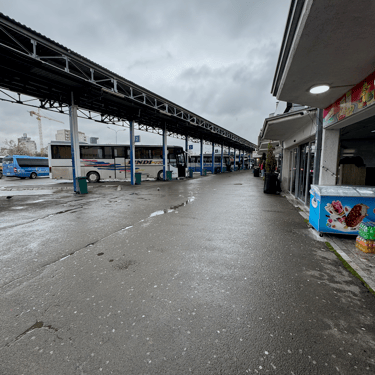
If you are coming from Skopje — the capital of North Macedonia, roughly 90 km south — the bus is the standard overland option. There are 5 to 19 daily departures depending on the operator, with journey times of approximately 2 hours and ticket prices around €8–10. The border crossing at Hani i Elezit/Blace is generally straightforward with a valid passport. Amalfi Tours is one of the regular operators.
A note for those planning to travel onward to Serbia: Serbia does not recognise the Kosovo border as an international border. Travellers who enter Kosovo from a third country (not from Serbia) may face difficulties entering Serbia. Check current entry requirements before planning a cross-border itinerary.
Getting around
The city centre is walkable. Most of the main sites — the NEWBORN monument, the Cathedral, the Grand Bazaar area, the Heroinat monument — are within reasonable walking distance of each other.
Bolt (the ride-hailing app) operates in Pristina and is the most convenient option for distances that are too far to walk. Fares are inexpensive by Western European standards — a cross-city trip typically costs €4–6. Metered taxis are also available; ensure the meter is running.
Currency
Kosovo uses the euro (€). Cash is widely accepted. Card payments work at most restaurants and hotels in the city centre.
Practical notes
Most visitors from EU, US, UK, and many other countries can enter Kosovo without a visa for stays up to 90 days. Check specific entry requirements for your passport.
Register your stay with local authorities if required (applies to stays beyond a certain duration — check current rules).
As of January 2024, Kosovo passport holders can travel visa-free within the Schengen Area.
What to see
The NEWBORN monument in the city centre is one of the most photographed sites in Kosovo. The letters change design every year on Independence Day.
The National Library is worth visiting both outside and in. Entry to the interior is generally open during working hours; the reading room and the auditorium can be accessed.
The Cathedral of Saint Mother Teresa is open to visitors, with free entry to the main nave. The bell tower costs €2 to climb and offers a view over the city.
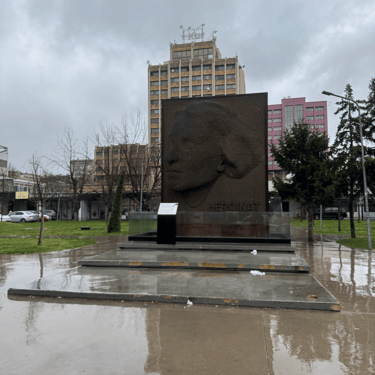
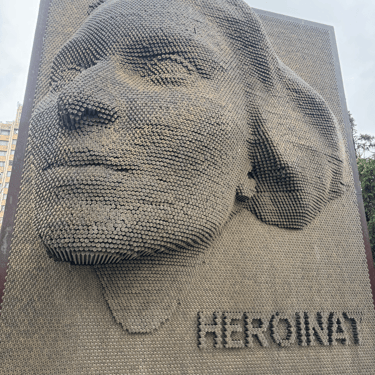
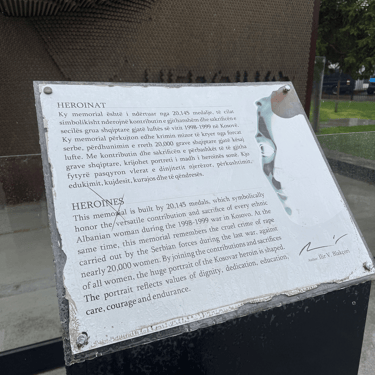
The Heroinat (Heroines) monument stands near the Grand Hotel. It was built from 20,145 medals — one for each Albanian woman estimated to have been raped by Serbian forces during the 1998–1999 war. The face in the monument is a composite portrait of all women. The plaque states the monument's intent in both Albanian and English
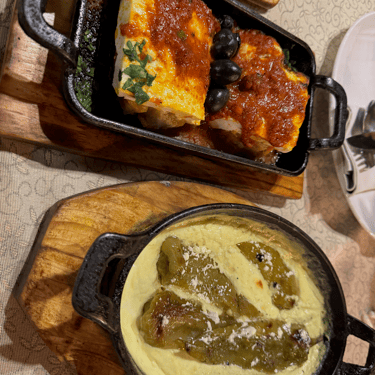
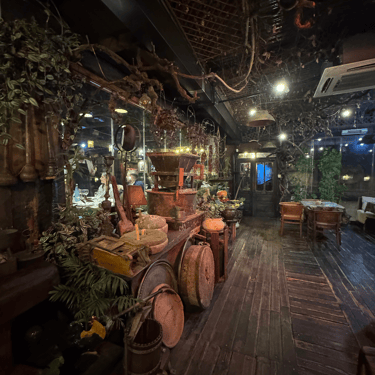
The area around Mother Teresa Boulevard and the old bazaar contains most of the city's cafes, restaurants, and walkable streets. Pristina has a strong cafe culture; options range from modern cocktail bars to traditional Albanian restaurants serving dishes like flija, tavë kosi (baked lamb with yoghurt), and grilled vegetables in cream sauce.
Kosovo's local beer is Peja, brewed in the western city of the same name. Lajthiza is the local sparkling water brand, recognisable by its blue bottle.
The Ibrahim Rugova monument in central Pristina commemorates Kosovo's first president, who led the non-violent resistance movement against Serbian rule in the 1990s.
For those staying longer, the Bear Sanctuary outside Pristina — run by international animal welfare organisation Four Paws — is accessible as a half-day trip. It houses bears rescued from captivity and includes an environmental education centre.
A Note on the Country's Status
Kosovo occupies an unusual position in international affairs: a functioning state with its own government, currency, army, and institutions, which is simultaneously not a UN member, not in the EU, and not recognised by five EU member states (Spain, Slovakia, Greece, Romania, Cyprus) nor by two of the world's most powerful states (Russia and China).
This ambiguity affects practical things — Kosovo is not part of Interpol, cannot join many international sporting federations under its own flag, and faces restrictions on travel documents in some countries. It also affects everyday questions of identity and belonging for the people who live there.
What it looks like from the street is a city going about its business — building, caffeinating, arguing about football — with a NEWBORN monument in the square that gets a new coat of paint every February.
Photos: Zayera Khan / Pristina, April 2026