Gamla Uppsala: Sweden's Ancient Royal Burial Mounds & What Was Found Inside
Gamla Uppsala holds three royal burial mounds, Viking Age mythology, medieval frescoes, and a chest older than the church itself. A complete visitor guide with photos.
SITES TO VISITSWEDENHISTORY
Zayera Khan
8/28/20254 min read
Gamla Uppsala: Where Sweden's Kings Were Burned and Buried
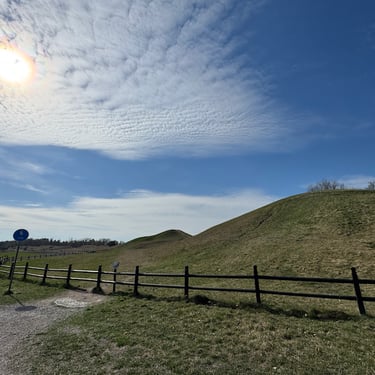
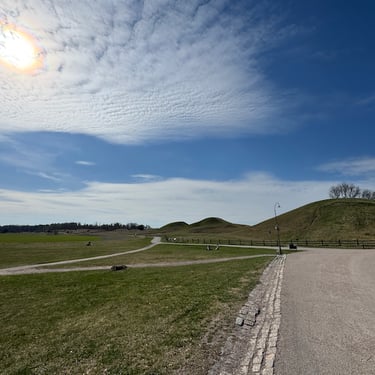
Just a few kilometres north of Uppsala, the landscape opens up and three enormous grass-covered mounds rise from the earth like something out of a myth. They are visible for miles. On a clear spring morning, they look exactly as ancient as they are. This is Gamla Uppsala — and it may be the most historically charged piece of ground in all of Scandinavia.
What Is Gamla Uppsala?
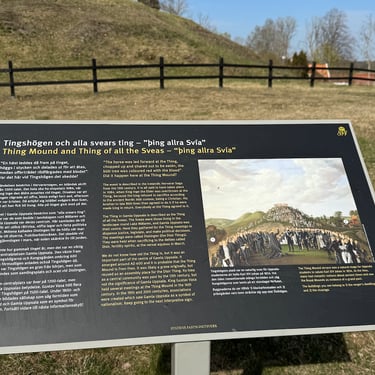
Gamla Uppsala — literally Old Uppsala — was the political, religious, and ceremonial heart of early Sweden for centuries. Long before Stockholm existed, this was where power lived. Kings were buried here. Sacrificial rites were performed here. The great assembly of the Swear people, the Thing, was held on this ground every year.
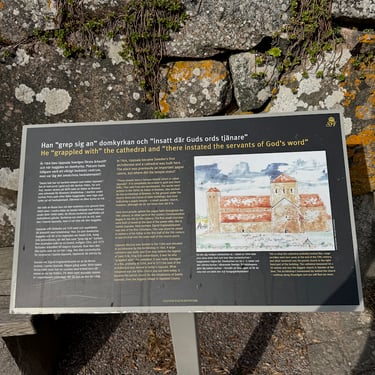
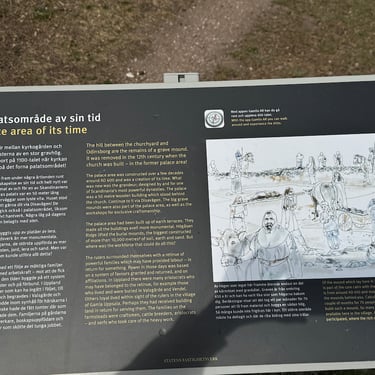
Today the site is dotted with bilingual information panels — in Swedish and English — that do an excellent job of bringing the archaeology and mythology to life as you walk the grounds.
The Royal Burial Mounds
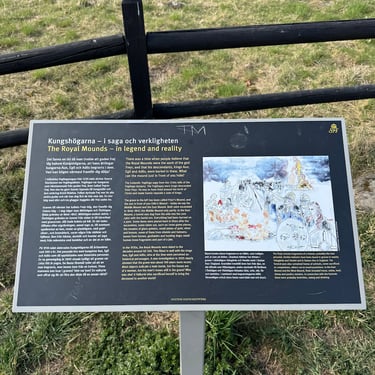
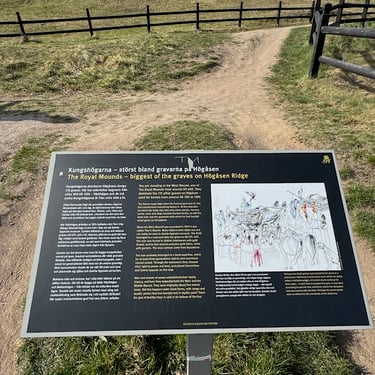
The three great mounds — the kungshögarna — date to the 5th and 6th centuries AD, placing them in the Migration Period and Vendel Period, just before what we typically call the Viking Age. They are named simply the East Mound, the West Mound, and the Middle Mound. Each stands around ten metres tall and roughly sixty metres wide.
These were not graves in the quiet sense. They were statements.
The East Mound was excavated in 1846–47 and the West Mound in 1874. Both contained cremation burials — the bodies burned on enormous pyres along with weapons, animals, and luxury objects before being covered with earth. The East Mound yielded the remains of a man, probably from the late 5th century, buried with a bear claw necklace, gaming pieces, and the bones of horses and birds of prey. The West Mound contained a high-status individual — possibly a woman — with gold-thread textiles and glass gaming pieces. The Middle Mound has never been fully excavated. It holds its secrets still.
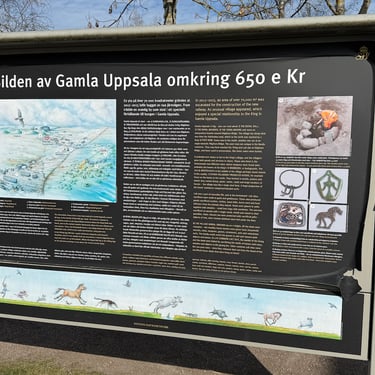
One of the most striking panels on site shows a scholarly reconstruction of what Gamla Uppsala looked like around 650 AD — a complex of halls, mounds, and open ceremonial space that makes clear this was no village. It was a capital.
The Thing Plain and the Horse-Racing Arena
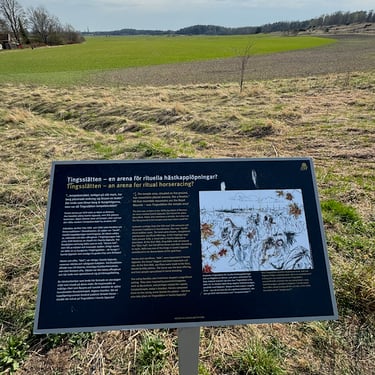
Directly connected to the mounds is the Tingslätten — the assembly plain where the Thing of all the Svears was held. One of the more surprising aspects of this sacred landscape is the evidence for ritual horse-racing here, which researchers believe may have had a ceremonial rather than purely competitive function. The Thing Mound, marked clearly on site, is where legal decisions, trade, and collective governance took place. Power here was not only buried — it was exercised, publicly, in the open air.
Norse Mythology on the Ground
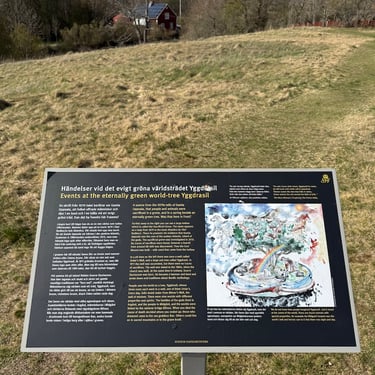
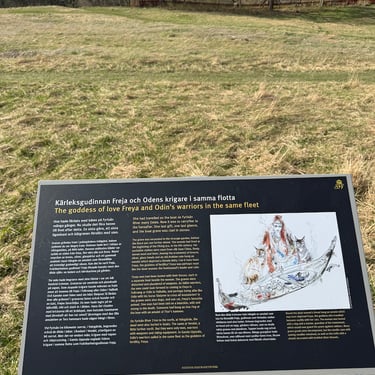
Several of the site's information panels deal directly with Old Norse mythology — Yggdrasil, Freya, and Odin — not as abstract stories but as beliefs that shaped what happened at this very site. The panels illustrate these connections thoughtfully, with artwork depicting the mythological world alongside the archaeological record. Standing at the mounds and reading these panels, the distance between myth and place collapses in a way that's genuinely unexpected.
What's also becoming clearer through recent research is that the mounds were just one part of a much larger royal complex — a palace area with halls for feasting, political ceremony, and elite life. Gamla Uppsala was not a burial ground with a church added later. It was a functioning seat of power.
The Gamla Uppsala Church
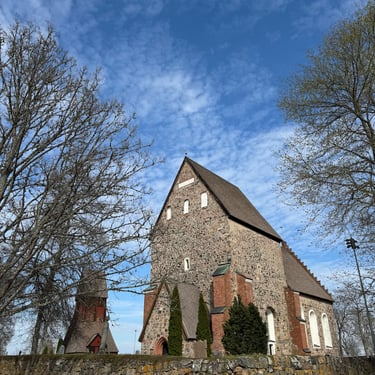
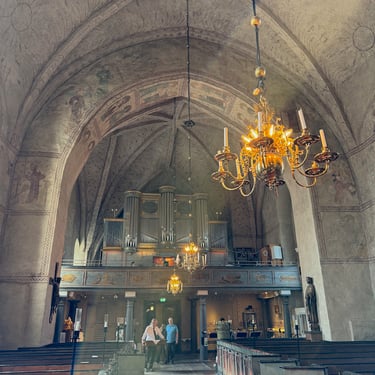
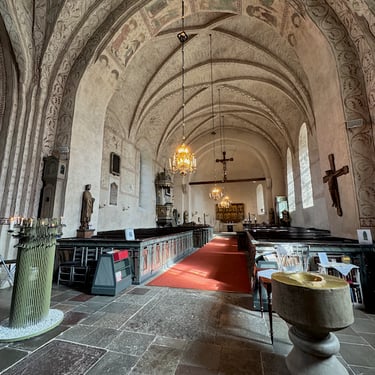
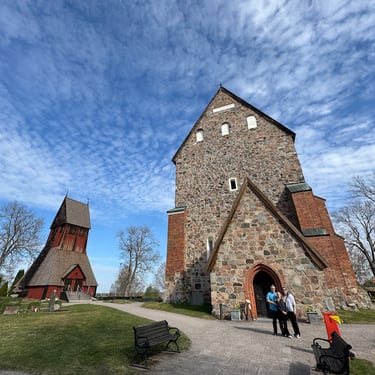
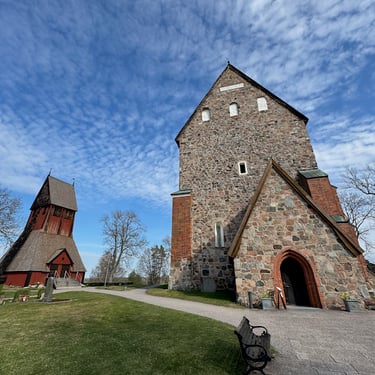
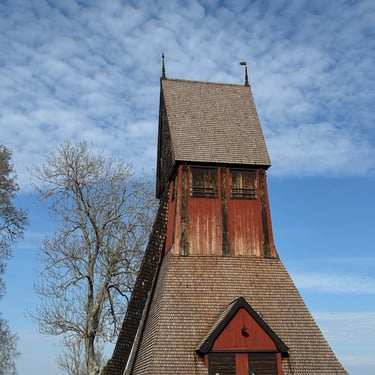
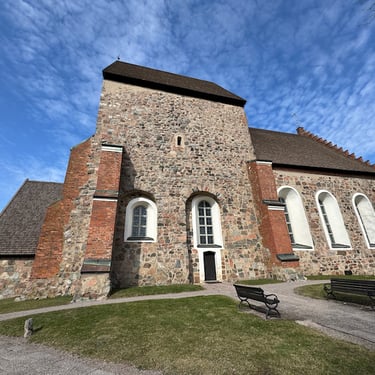
The medieval church at Gamla Uppsala is one of the most layered buildings in Sweden. Built primarily in the 12th century, it served briefly as an archbishop's cathedral before the see moved to the new Uppsala. What stands today is only part of the original structure — but it is still stunning, built in rough granite and brick, with a separate wooden bell tower that adds to the sense of accumulated time.
Inside the Church: Frescoes and a Medieval Chest
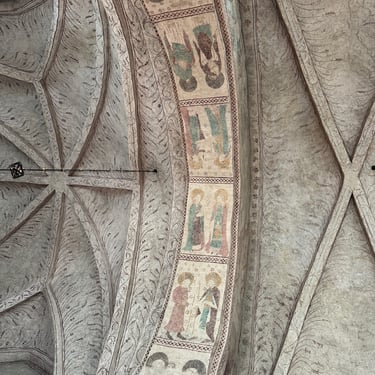
Inside, the church is cool and simple. The medieval frescoes that cover the vaulted ceiling are remarkable — figures from scripture and legend, painted in a palette of ochre and terracotta that has survived centuries. They reward slow looking.
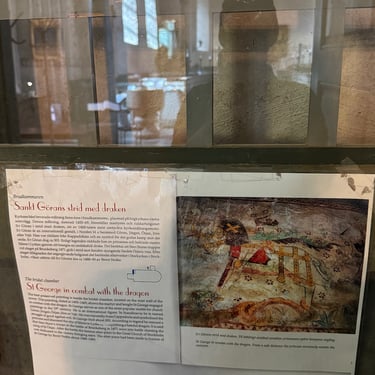
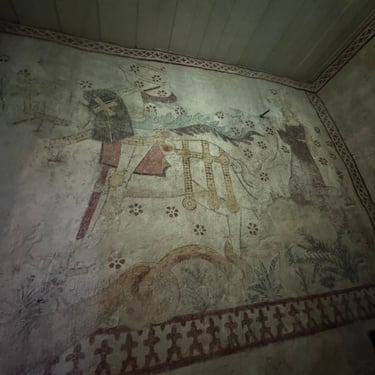
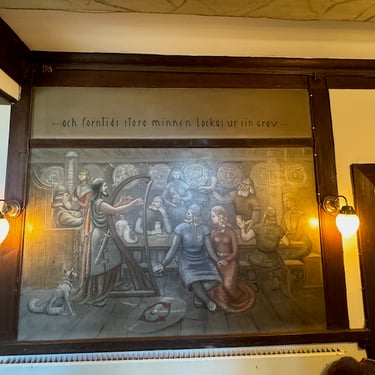
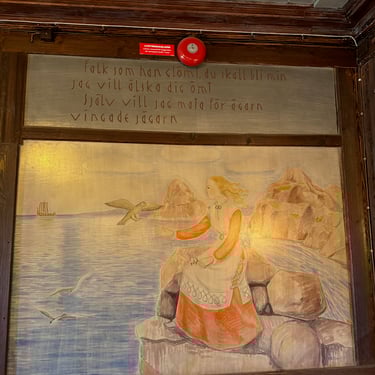
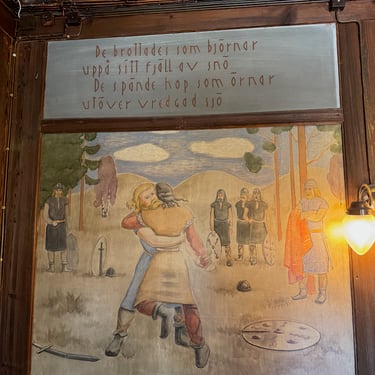
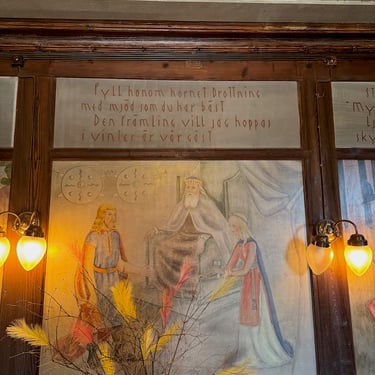
Along the walls, further medieval paintings depict scenes that blend Christian iconography with something older and harder to name. Photographing them in the warm, low light of the wall lamps, they feel less like decoration and more like memory.
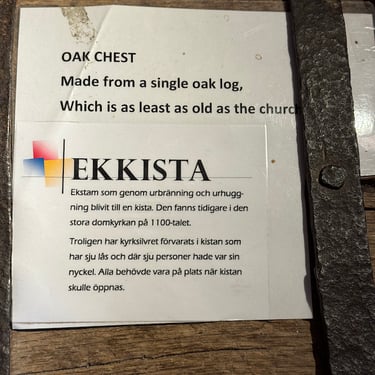
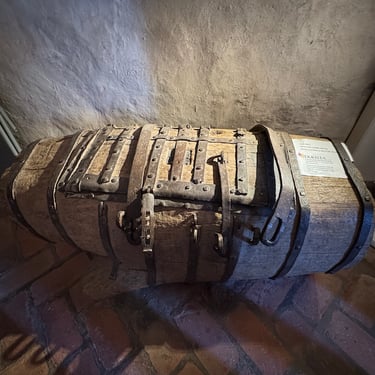
One of the most quietly astonishing objects in the church is the Ekkista — an oak chest with iron fittings, described on the information panel as being at least as old as the church itself. It once held the cathedral's key, and required seven keyholders to open it simultaneously. It sits in the corner almost without ceremony, which somehow makes it more affecting.
The Museum Artifacts
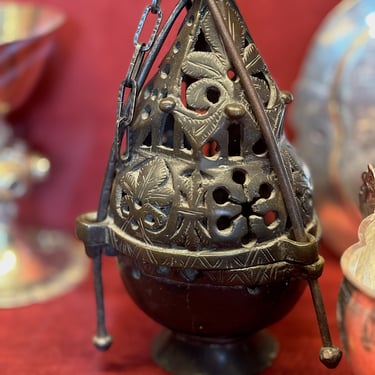
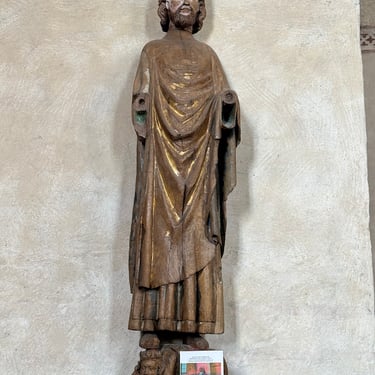
The small on-site museum holds original finds from the excavations and broader context for the burial rituals. The objects are not large — a fragment of gilded bronze, a carved wooden figure — but each one was placed deliberately with someone who mattered enormously to the people who stood around the fire. The museum rewards slowness.
Odinsborg: Mead and Old Norse Atmosphere
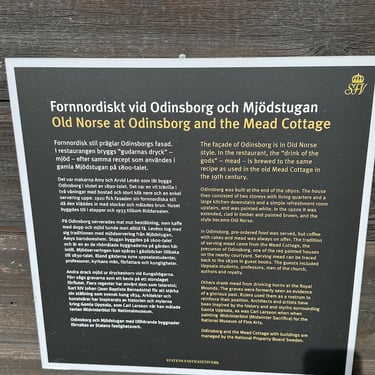
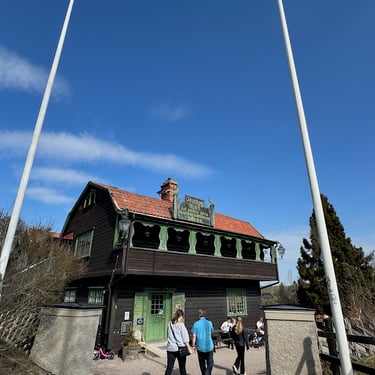
Just by the mounds stands Odinsborg — a restaurant and mead house whose facade is inscribed with Old Norse text. The tradition of serving mead (mjöd) here follows the same recipe used in the old Mead Cottage in Uppsala in the 19th century. It's a place to sit with coffee or something stronger and let the afternoon slow down. After walking the mounds, you'll want somewhere to land — and this is it.
How to Get There
Gamla Uppsala is roughly 5 km north of Uppsala city centre. Bus 2 from Uppsala central station takes about 15 minutes. From Stockholm, take the regional train to Uppsala (around 40 minutes) and connect from there.
The site and mounds are free to walk around year-round. The museum charges a small entrance fee. Check current opening hours at raa.se or the Uppsala municipality museum pages, as seasonal hours apply.
Why It Still Matters
What makes Gamla Uppsala so affecting is the combination of scale and intimacy. The mounds are enormous, the history is ancient, and yet the site remains accessible, quiet, and almost uncommercialized. You can walk right up to the mounds. Stand on top of them. Look out across the same flat landscape the people who built them would have seen.
Sweden has no shortage of prehistoric sites, but few carry this particular quality — the sense of being at a genuine centre of something, a place where people gathered for centuries not by accident but by intention. The information panels are bilingual and thoughtfully written. The church is open. The mead house is ready. Bring good shoes and more time than you think you need.
Gamla Uppsala is roughly 5 km north of Uppsala city centre. Take bus 2 from Uppsala central station. The burial mounds are open year-round and free to visit.